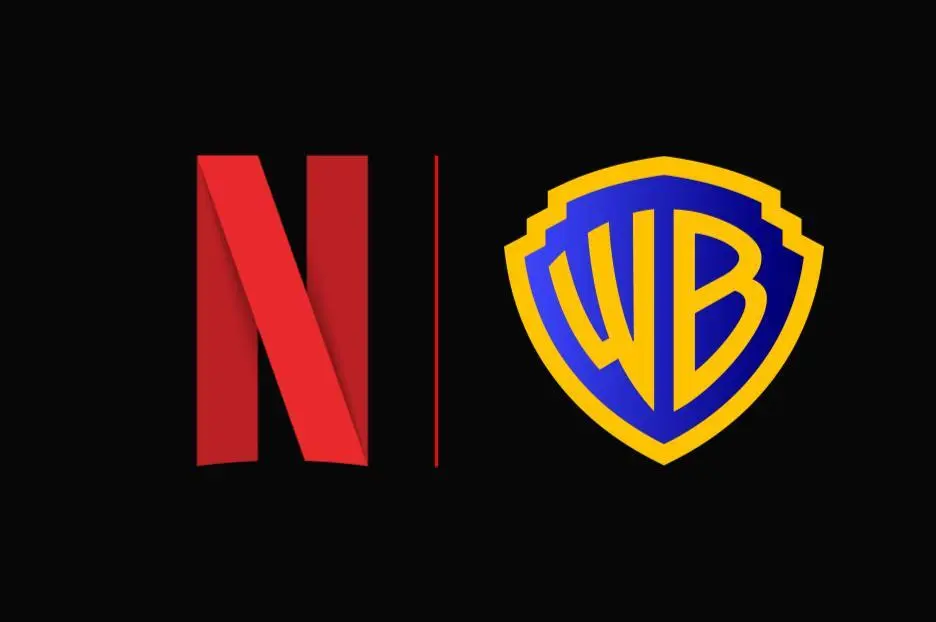
Netflix has reached an agreement to acquire Warner Bros., marking a seismic move that would fuse the world’s largest streaming platform with one of Hollywood’s most storied studios, according to a report from The Wall Street Journal.
The deal is said to be valued at $72 billion, or roughly 106 trillion won, eclipsing Disney’s 2019 purchase of 20th Century Fox ($71 billion) and positioning itself as the entertainment industry’s biggest merger of the past decade.
Industry insiders are already describing the transaction as a “game-changer” that could redraw the competitive map of the streaming era. Should Netflix and the century-old Warner Bros. formally combine, analysts expect a sweeping reset across content production, distribution strategy and the balance of power between theatrical exhibition and direct-to-consumer platforms. Warner Bros.’ deep bench of marquee IP — including the ‘Harry Potter’ franchise and the DC universe — would instantly bolster Netflix’s library with a slate of globally recognized brands, giving the streamer a decisive advantage over its rivals.
Warner Bros. emerged in 2022 from the merger between WarnerMedia and Discovery, bringing under one roof a film and TV studio, the HBO Max streaming service and a suite of major cable networks such as CNN and Discovery Channel. However, according to the report, Warner Bros. intends to spin off its cable channel assets prior to the sale’s completion, meaning those networks will not be included in the acquisition.
If finalized, the combined companies would command an estimated 450 million global subscribers — a figure that is expected to trigger significant regulatory scrutiny in the U.S. and Europe. With the streaming landscape already defined by fierce competition and escalating consolidation, regulators may view the deal as granting a single entity outsized vertical influence across production, distribution and platform control.
Sources caution that the acquisition remains in its early stages, with regulatory review, structural adjustments and integration planning likely to extend the timeline before any merger can be fully completed. Even so, the announcement has sent shockwaves through Hollywood and the broader media ecosystem, with observers predicting long-term ramifications for streaming, theatrical exhibition and the traditional cable sector.